
Pregnancy is an exciting journey filled with important decisions. One of the most valuable advances in prenatal care is the Non-Invasive Prenatal Test (NIPT), a simple blood test that helps assess the baby’s risk of certain chromosomal conditions without posing any risk to the pregnancy.
If you are searching for an NIPT Test in Chandigarh, understanding when the test is recommended, what it can detect, and how the results should be interpreted is essential. At Dr. Dua’s Diagnostics & Imaging Centre, Chandigarh, we believe that every prenatal screening test should be accompanied by expert fetal medicine consultation and detailed ultrasound evaluation to ensure the best care for both mother and baby.
What is an NIPT Test?
Non-Invasive Prenatal Testing (NIPT) is an advanced prenatal screening test that analyzes tiny fragments of the baby’s DNA (cell-free fetal DNA) circulating in the mother’s bloodstream. It requires only a maternal blood sample and can usually be performed from 10 weeks of pregnancy onwards.
What Can NIPT Detect?
NIPT primarily screens for Down syndrome (Trisomy 21), Edwards syndrome (Trisomy 18), and Patau syndrome (Trisomy 13). Some panels also assess sex chromosome abnormalities and selected microdeletion syndromes. It is a screening test—not a diagnostic test.
Who Should Consider NIPT?
Women aged 35 years or older, those with abnormal first-trimester screening, increased NT, suspicious ultrasound findings, previous chromosomal abnormalities, or anyone seeking highly accurate non-invasive screening may benefit from NIPT.
When Should NIPT Be Done?
The test is generally performed from 10 weeks onwards. The ideal timing should be decided after consultation with a fetal medicine specialist.
Is NIPT Better Than the Double Marker Test?
NIPT has higher detection rates and fewer false positives for common trisomies. However, the choice depends on clinical history and ultrasound findings.
Does NIPT Replace Ultrasound?
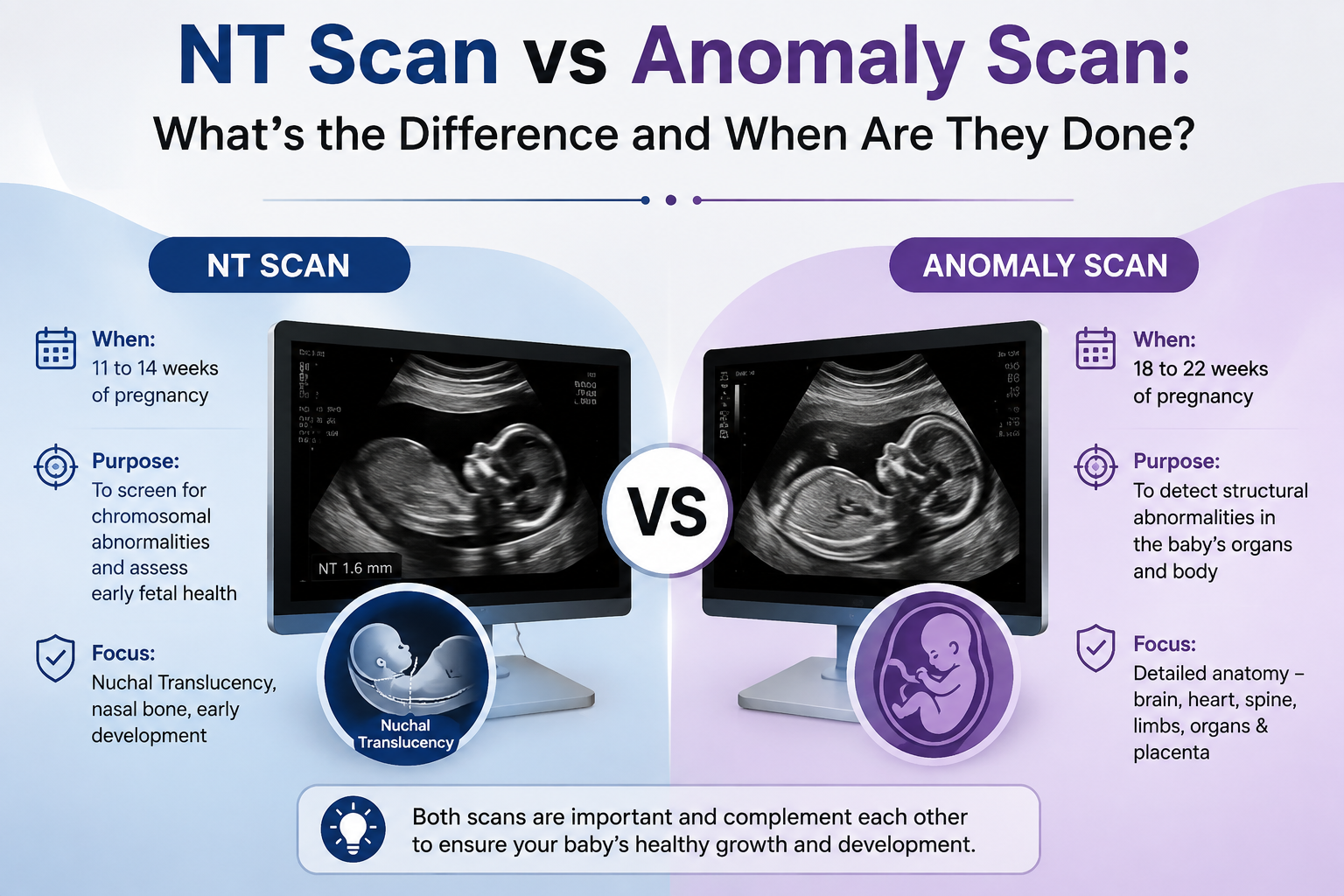
No. Ultrasound remains essential for detecting structural abnormalities. Routine NT scans, Level II anomaly scans, and growth scans are still required.
What Happens if the NIPT Result is High Risk?
A high-risk NIPT result should usually be confirmed with CVS or amniocentesis before major pregnancy decisions are made.
Where Can You Get an NIPT Test in Chandigarh?
At Dr. Dua’s Diagnostics & Imaging Centre, Chandigarh, patients receive fetal medicine consultation, detailed ultrasound, counselling, blood sample collection through accredited laboratories, interpretation of results, and guidance regarding further testing when indicated.
Frequently Asked Questions
• Is NIPT safe? Yes.
• When can it be performed? From 10 weeks.
• Is fasting required? No.
• Does it diagnose Down syndrome? No, it is a screening test.
• Are ultrasounds still needed? Yes.
Consult a Fetal Medicine Specialist in Chandigarh
Choosing the right prenatal screening test is an important decision. Dr. Ashish Dua provides comprehensive fetal medicine services including prenatal screening, detailed fetal ultrasound, fetal echocardiography, CVS, and amniocentesis when indicated. Schedule a consultation for individualized guidance.