Understanding Amniocentesis
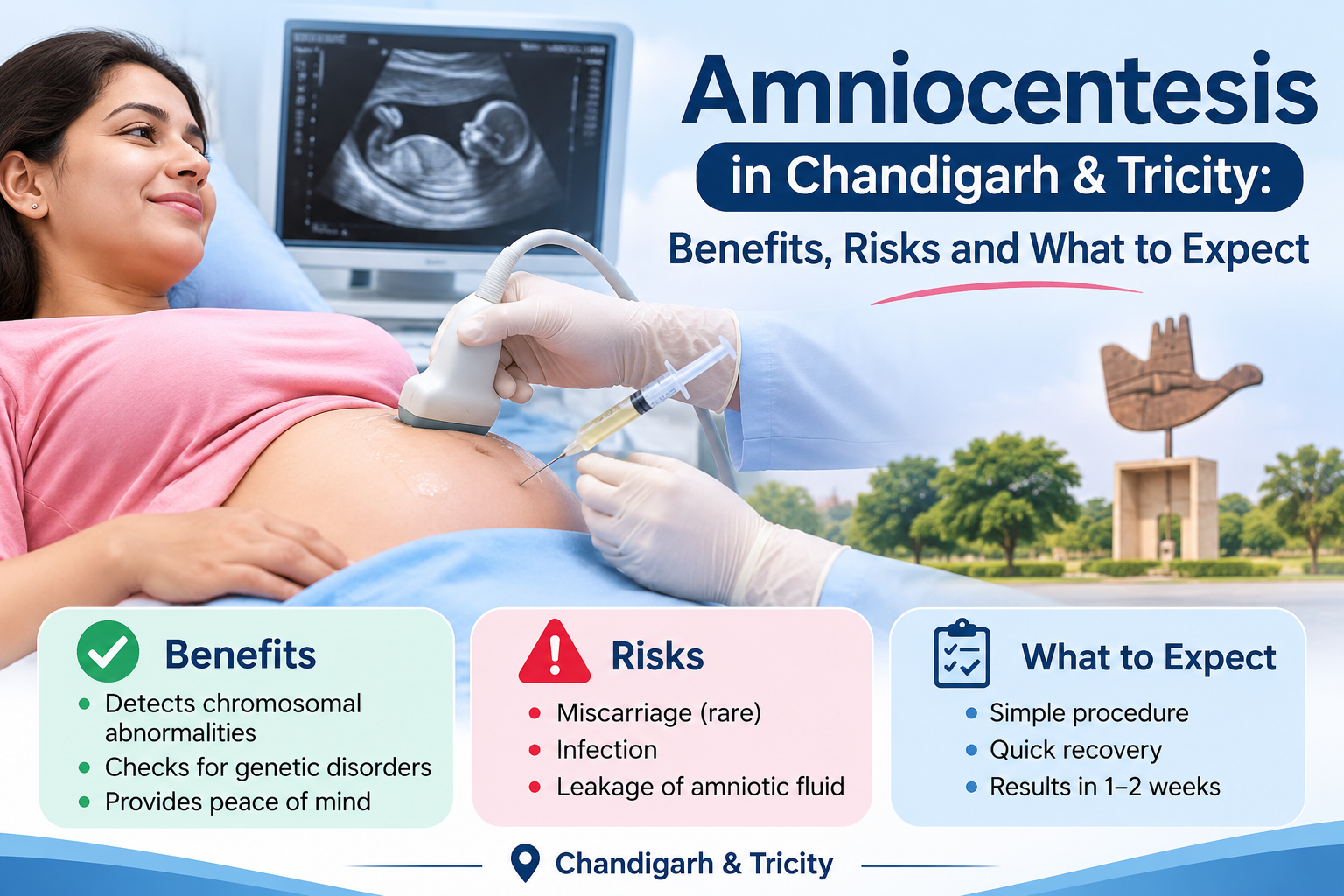
Amniocentesis is a prenatal diagnostic procedure in which a small sample of amniotic fluid—the fluid surrounding the baby in the uterus—is collected for laboratory testing. The sample contains fetal cells and other material that can be analysed for certain chromosomal or genetic conditions, depending on the tests requested.
Amniocentesis may be considered when pregnancy screening indicates an increased chance of a chromosomal condition, when there is a relevant family or pregnancy history, or when a specialist identifies another clinical reason for diagnostic testing. If you are looking for information about amniocentesis in Chandigarh, Mohali or Panchkula, discuss your individual circumstances with a qualified fetal medicine or prenatal diagnostic specialist.
When Is Amniocentesis Performed?
Amniocentesis for genetic or chromosomal diagnosis is commonly performed from around 15 weeks of pregnancy onward. The exact timing depends on the clinical indication and the advice of the treating specialist. Your doctor will explain the procedure, the tests that can be performed on the sample, the expected reporting time and the limitations of the results.
Benefits of Amniocentesis
1. Diagnostic information about selected conditions
Depending on the laboratory tests requested, amniocentesis can help diagnose certain chromosomal conditions, including Down syndrome (trisomy 21), Edwards syndrome (trisomy 18) and Patau syndrome (trisomy 13). Additional genetic tests may be appropriate in selected cases.
2. More definitive answers than screening alone
Screening tests estimate the chance of a condition; they do not confirm a diagnosis. Amniocentesis is a diagnostic test for the conditions specifically analysed, although no single test can detect every possible genetic or developmental condition.
3. Helps guide counselling and pregnancy care
Results can help the clinical team provide condition-specific counselling and discuss appropriate care and next steps with the parents. The meaning of a result depends on the test performed and the pregnancy’s clinical context.
What Are the Risks of Amniocentesis?
Amniocentesis is an invasive procedure and should be considered after a discussion of its potential benefits, limitations and risks. The risk profile depends on individual circumstances and the experience and practices of the clinical team.
Pregnancy loss
There is a small risk of pregnancy loss following amniocentesis. Your specialist should explain the estimated risk in the context of your pregnancy and the centre where the procedure will be performed.
Amniotic fluid leakage or infection
In uncommon cases, fluid leakage or infection may occur. Follow the post-procedure instructions provided by your treating team and seek prompt medical advice if you develop concerning symptoms.
Temporary discomfort or cramping
Some people experience brief discomfort or cramping. Before the procedure, ask your doctor what to expect and which symptoms require urgent assessment.
Who May Be Advised to Consider Amniocentesis?
A specialist may discuss amniocentesis when prenatal screening shows an increased chance of a chromosomal condition, when there is a family history of a relevant genetic disorder, when a previous pregnancy or test result raises concern, or when other clinical findings warrant diagnostic evaluation. It is not necessary for every pregnancy, and the decision should be individualised after counselling.
Amniocentesis in Chandigarh, Mohali and Panchkula
Expectant parents in the Chandigarh Tricity region—including Chandigarh, Mohali, Panchkula and nearby areas—can speak with a qualified fetal medicine specialist to understand whether prenatal diagnostic testing is appropriate. Before proceeding, clarify the reason for testing, the conditions being investigated, the benefits and limitations, the procedure-related risks, and how results will be explained.
At Dr. Dua’s Diagnostics & Imaging Centre, Chandigarh, patients can seek guidance on pregnancy imaging and fetal medicine services. Please contact the centre directly to confirm whether the specific procedure or testing pathway you need is available and to arrange an appropriate consultation.
Important Information
Amniocentesis is a medical diagnostic procedure and must be undertaken only for legally permitted medical indications. In India, prenatal diagnostic techniques must not be used for sex determination or sex selection. This article is for general education and is not a substitute for an individual consultation with your treating doctor.
Frequently Asked Questions
Is amniocentesis a screening test or a diagnostic test?
It is a diagnostic procedure for the conditions specifically assessed in the laboratory. Screening tests estimate risk and do not, by themselves, confirm a diagnosis.
At how many weeks of pregnancy is amniocentesis performed?
For genetic or chromosomal diagnosis, it is commonly performed from around 15 weeks onward. Timing depends on the indication and specialist advice.
Does amniocentesis detect every genetic condition?
No. The conditions that can be assessed depend on the tests ordered. Discuss the scope and limitations of testing with your specialist.
Is amniocentesis risk-free?
No invasive procedure is risk-free. Potential risks include a small risk of pregnancy loss and uncommon complications such as fluid leakage or infection. Your doctor can explain the risks relevant to your situation.
Where can I ask about amniocentesis in the Chandigarh Tricity region?
You can consult a qualified fetal medicine or prenatal diagnostic specialist in Chandigarh, Mohali or Panchkula to discuss the indication, available testing and next steps.
Book a Consultation
If you have questions about prenatal diagnostic testing, speak with your obstetrician or a qualified fetal medicine specialist. For information about services at Dr. Dua’s Diagnostics & Imaging Centre, Chandigarh, visit www.drduadiagnostics.com or contact the centre directly.